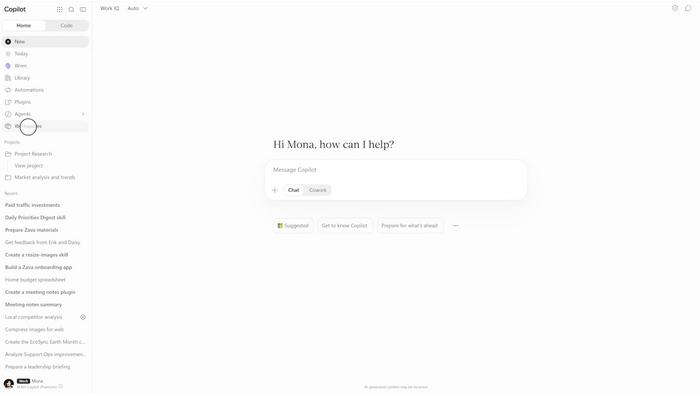

Galaxus has announced the launch of an interface based on the Model Context Protocol (MCP), allowing assistants like Claude or ChatGPT to access its product catalogue directly. According to ICTjournal, the Swiss retailer is the first in the country to officially offer this connection.
For a Romandy SME leader, this news deserves attention. It shows that product and service searches are already shifting towards AI conversations. Being visible on Google may no longer be enough. The question is no longer whether AI assistants will become a discovery channel, but when your business will be there — or not.
What Galaxus has actually put in place
The MCP protocol, originally developed by Anthropic, creates a direct bridge between an AI assistant and a database. Unlike a standard web search, the assistant queries the source in real time. Galaxus clarifies that its interface draws on the same foundation as its online shop, with no customer account required.
Users can ask questions about products and receive images, prices, ratings, and review summaries directly in the conversation. Purchases remain impossible from the assistant: users must go to the Galaxus website to complete their order. The retailer handles maintenance of this interface itself, unlike unofficial MCP connections developed by third parties for other shops.
Microsoft and ChatGPT already support this standard. Galaxus analyses search types and filter usage, but states it does not record complete prompts or attempt to identify users. A link to a customer account could be added later, with features such as wish lists or shopping carts.
What this changes for a Romandy SME
This initiative primarily concerns online retailers and businesses whose customers actively search for products or services. Imagine a technical hardware store in Martigny, a property management company in Lausanne, or an office equipment supplier in Fribourg. If an AI assistant can already query Galaxus for a drill, cleaning equipment, or a printer, why not your catalogue?
The MCP protocol is not reserved for giants. It is an open standard. An SME with a structured website and clean database can theoretically offer the same accessibility. The technical barrier lies not in the protocol itself, but in the quality and structuring of the data.
Conversely, a craft joinery in Sierre whose customers arrive through word of mouth probably has no immediate need. A fiduciary / accounting firm whose clientele comes from cross-referrals neither. The AI channel matters when the purchase decision involves comparison and detailed information gathering.
Hypothetical scenario: an independent bookshop in Neuchâtel
Typical case: a bookshop with an online sales site wants to stay competitive against major platforms. It has a structured catalogue with complete listings, reader reviews, and editorial summaries.
With an MCP interface, a customer could ask Claude: "What book on Valais viticulture would you recommend?" The assistant would query the bookshop's catalogue, find relevant titles, display prices, availability, and excerpts from reviews. The customer would then go to the site to order.
The hypothetical gain for this bookshop: a few minutes of search time saved for the customer, but above all a presence where the decision is now being made. Without it, the assistant might suggest another site, or invent an answer from outdated or erroneous data.
Points of caution for an SME
Swiss nFADP (nLPD) and data hosting. The MCP protocol routes queries to your servers or those of your provider. If your product data contains sensitive information, verify where it is hosted. The FDPIC remains the reference for compliance questions. A mention in your terms of use regarding access by AI assistants may be prudent.
Hidden costs. Developing and maintaining an MCP interface requires technical time. Galaxus does this in-house. An SME will likely need to go through a provider. Also plan for maintenance: every change to your website or database could break the connection.
Standard maturity. MCP is young. Anthropic launched it, Microsoft is adopting it, but the ecosystem is evolving fast. Investing heavily now carries a risk of disruption. Starting small, with a limited catalogue, limits exposure.
Supplier dependence. If your customers discover your products through ChatGPT or Claude, you depend on these platforms for your visibility. Their selection algorithm, any future paid offerings, their access conditions: you control none of this. Diversifying channels remains essential.
What to do now
- Check whether your customers already use AI assistants to find you. Ask them directly during your next exchanges. This is the best indicator of priority.
- Audit the quality of your existing data. An AI assistant can only answer accurately if your product listings are complete, up to date, and structured. This is often the most cost-effective starting point, even without MCP.
- Look into MCP with a technical contact. The standard is publicly documented. A lightweight automation can test feasibility with an extract from your catalogue.
- Evaluate the effort-to-benefit ratio before developing. For a retailer with thousands of references, this is relevant. For an SME with ten bespoke services, optimising your standard website probably comes first.
- Contact us for an initial discussion. FlowBiz.ai, based in Sion, supports Romandy SMEs on these topics in small steps. Our selection assistant helps identify what is worth it for your specific situation, and our two-minute AI quiz asks the right questions.
Galaxus is opening a path. Not every Romandy SME needs to follow it immediately. But ignoring this channel, as search habits shift, exposes you to progressive invisibility. Better to observe closely, test modestly, then decide from an informed position.