
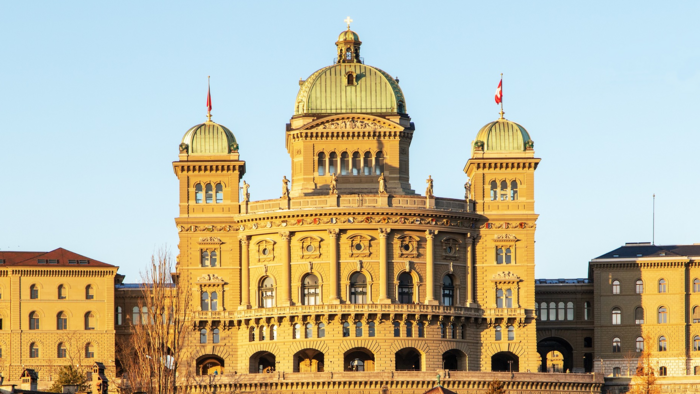
The National Council has followed the Council of States and approved a motion calling on the Federal Council to build sovereign digital infrastructure. According to ICTjournal, the text was adopted by 126 votes to 66 and forwarded to the Federal Council.
For you, as a business leader in Sion, Lausanne, or Neuchâtel, this decision does not change your obligations tomorrow morning. It does, however, raise a legitimate question: should you get ahead of this, and how do you choose between Swiss, European, or American hosting for your customer data and AI tools?
What Parliament decided — and what it did not
The motion, tabled by Councillor of States Charles Juillard (The Centre/JU), asks the Federal Council to propose a legislative revision. The goal: to allow the Confederation to promote, co-finance, steer, and oversee sovereign digital infrastructure, together with cantons, research institutions, and the private sector. This would include a cloud service and an autonomous exchange platform.
The Federal Council had recommended rejection. It considered that sufficient legal bases already existed, notably Article 11 of the LMETA, and that several ongoing projects were already underway. The National Council committee itself had narrowly approved the motion: 13 votes to 12. The final vote was clearer, but the legislative path remains open.
Key point to remember: the Swiss Government Cloud (SGC) already exists, but it is reserved for government authorities. No equivalent service is currently planned for the private sector. The motion aims to fill this gap, with no fixed timeline or budget.
What changes for your Romandy SME: little, but the signal matters
In the short term, nothing. You are not required to move your data. The motion does not create new direct regulation for businesses. It does not amend the nFADP (nLPD) or the FADP implementing provisions.
The political signal is nonetheless clear: Switzerland wants to reduce its dependence on foreign infrastructure, particularly given the challenges of AI. For an SME hesitating between Microsoft Azure, AWS, a Swiss host such as Infomaniak, or a Valais-based datacentre, this legitimises the local choice without mandating it.
| Your situation | What the motion changes |
|---|---|
| You already use Swiss hosting | Nothing, but you are ahead of the political discourse |
| You are on AWS/Azure/Google with data in Europe | Nothing legal, but heightened vigilance on subcontractors |
| You send data to AI tools (ChatGPT, etc.) | The question of processing location remains entirely open, motion or not |
| You are preparing an AI project or cloud migration | One more argument for evaluating Swiss offers |
Hypothetical scenario: a fiduciary in Martigny facing a demanding client
Imagine a 12-person accounting firm in Martigny. It handles bookkeeping for retailers, carpenters, and a small property management company. A client — a food distribution business — asks in writing: "Where are our payroll data and financial statements hosted? We want to avoid any transfer outside Switzerland."
The firm currently uses accounting software hosted in Germany and occasionally sends extracts to its auditor via an American storage service. It is also testing an AI assistant to summarise its emails.
With or without this motion, it must already answer its client. The motion does not give it any new Swiss infrastructure usable tomorrow. It gives it a selling point if it migrates to Swiss hosting, and additional pressure to document its choices. The time spent checking subcontracting clauses and processing locations: a few hours per contract, repeated every year.
Points of vigilance: costs, dependency, and speed of execution
The minority on the parliamentary committee warned against "high and difficult-to-predict costs" and the risk of "slowing down ongoing projects". These warnings apply to SMEs too.
The cost of "Swiss first". Swiss hosting often costs more than an equivalent in Ireland or Germany. The difference is justified if you have sensitive clients, process health data, or if your internal policy requires it. For an internal application without critical data, it is an expense to weigh carefully.
Vendor lock-in. Changing host takes time. Changing twice because the promised "Swiss" offer never materialised costs even more. The motion sets no timeline. Waiting for federal infrastructure before launching a project would be a strategic mistake.
Legal certainty on AI. The parliamentary majority called for "rapid and comprehensive solutions" to guarantee legal certainty. Yet Swiss AI regulation is evolving slowly. The EU AI Act applies to companies active in the EU, not in Switzerland. The nFADP (nLPD) remains the main framework, with its principles of proportionality and transparency. For any specific compliance question, the Federal Data Protection and Information Commissioner (FDPIC) or a specialist remain the appropriate contacts.
The risk of over-regulation. A poorly designed sovereign infrastructure could impose standards ill-suited to SMEs, or exclude practical tools. The current text does not do this. Monitor future legislative revisions.
What to do now
- Inventory your tools and their hosting locations. Point-of-sale software, CRM, email, backups, AI tools. Note the country, not just the brand. One hour suffices for a 20-person SME.
- Check your subcontracting agreements. Can your host change datacentre without notifying you? Does it transfer data to third-party providers? These clauses matter more than the billing country.
- Evaluate a Swiss offer at your next renewal, not before. No hasty migration. At your next contract milestone, request a quote from a Swiss host and compare guarantees, not just price.
- Document your choices for your clients and your fiduciary. A two-page internal note on your processing locations reassures your contacts and speeds up audits.
- Test your AI tools with Swiss hosting if confidentiality is critical. Assistants and automations can run on Swiss infrastructure. Our selection assistant helps evaluate what fits your situation, and our two-minute quiz asks the right questions.
The motion passed by Parliament is a strong political marker. It does not yet provide any tool usable by a Romandy SME. It reinforces those who have already chosen Swiss hosting, and encourages others to ask the question at the next turning point. The answer will depend on your clients, your data, and your tolerance for geopolitical uncertainty — not on any new legal obligation.
FlowBiz.ai supports SMEs in French-speaking Switzerland with AI and automation in Sion and Valais, with Swiss-hosted solutions delivered in stages. To discuss this, contact us.